Jim
Anxious PeopleJim is an older police officer, Jack’s father, and a widower whose care is more readily expressed through action than conversation. At the Local police station, he and his son work in close quarters, often separated only by their desks and computer screens. Their relationship carries the friction of two generations of officers: at the end of a career, Jim is trying to understand what it has all been for, while Jack, at the beginning of his, is looking for a purpose. Jim’s reserve does not mean indifference. It means that concern often reaches Jack indirectly, through a look, a practical offer, or a silence that leaves the most important words unsaid.
Identity and Work
Jim’s working life places him alongside Jack in a police station where much of the job consists of documenting what has been done. The two men can scarcely avoid one another, and the routine proximity of their desks makes their personal distance visible: they sit on opposite sides, partly screened by computers, while sharing both a profession and a family history. Their different points in that profession give them different questions. Jim is looking back and trying to locate meaning; Jack is still trying to find a way forward.
The generational gap also appears in their uncertainty about how to speak to each other. Jim understands that Jack is hurting, but older men often struggle to find words that would make their concern plain. When Jack has left the staffroom, Jim sits alone with his coffee, unable to say directly what he most wants his son to hear. The scene makes his silence a form of emotional limitation, not a lack of attention: he notices Jack’s pain, but does not know how to approach it.
Jim has spent his whole life in the police, a fact Jack invokes when asking his father for help with the hostage situation. Jack has taken a course in listening and negotiation, and Jim’s experience is relevant even when neither man can offer an easy answer. In the crisis, Jim also proves capable of adapting to newer police equipment. He does not know the technical name for the Special phone, a device that can place calls despite poor signal, but he understands its practical value. The phone is sent to the Bank robber during the hostage drama, and Jim is proud that the idea to use it was his.
Fatherhood, Loss, and the Absent Daughter
A photograph of Jim’s late wife sits on his desk, as it does on Jack’s. Her absence connects father and son even when their relationship is strained. She had been a source of understanding between them, and her memory still makes each more patient with the other. When she was dying, Jack held her hand and promised to take care of Jim. That promise reflects the reversal at the heart of their bond: the son feels responsible for protecting a father who is himself still trying to protect his children.
Jim also keeps a photograph of his daughter, who is seven years older than Jack. She rarely comes up in conversation and contacts the family when she needs money. At the beginning of each winter, Jim hopes she might come home for Christmas. Jack does not tell him he is being naïve; he lets his father keep the hope, an act of love rather than agreement. Later, when Jim acknowledges that she is ill, Jack quietly confirms that he knows and offers him another beer. Their familiar exchange gives Jim a way to voice his worry without requiring either of them to resolve it.
The difference between father and son is especially clear in how each responds to the daughter’s addiction. Jim cannot bring himself to call her an addict; he calls her ill, a description that makes the situation easier for him to bear. Jack names her heroin addiction plainly. Yet neither response frees them from the repeated cycle of hope and disappointment. The daughter once left home, sought treatment, and checked herself out of an exclusive private clinic after two weeks. Jack had used the savings intended for an apartment to pay for that treatment, and the money was gone. Six months later, she called in the middle of the night asking for a few thousand for a plane ticket home. Jack sent it; she did not come.
The same pattern surfaces after Jim’s wife dies. Jack calls his sister and sends money for a flight so she can attend the funeral, but she does not appear. For Jim, the daughter remains someone to hope for and to describe gently. For Jack, she is also the older sister he once idolized, someone he could not follow when she left, help when she searched for herself, or save when she succumbed to addiction. Jim and Jack carry these failures differently, but each remains attached to her. Their yearly Christmas exchange is not a solution; it is a small, repeated accommodation that lets them stay together in the face of what they cannot change.
The Hostage Crisis and Jim’s Intervention
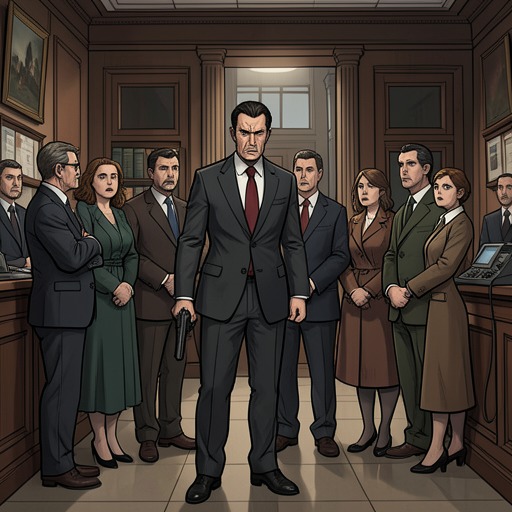
During the apartment hostage crisis, Jack’s anger at the witnesses becomes difficult to contain. He is convinced that someone knows what happened and is withholding it, and fears that a man might be somewhere in the building, badly hurt. Jim is part of the professional and family world in which Jack is trying to keep that fear under control. The case also brings their private anxieties close to the surface: Jack still dreams that he saved the man who jumped from the bridge, while Jim dreams that it was Jack who jumped instead. Their nightmares turn the same bridge into opposite fears, exposing the protective instinct each has trouble expressing directly.
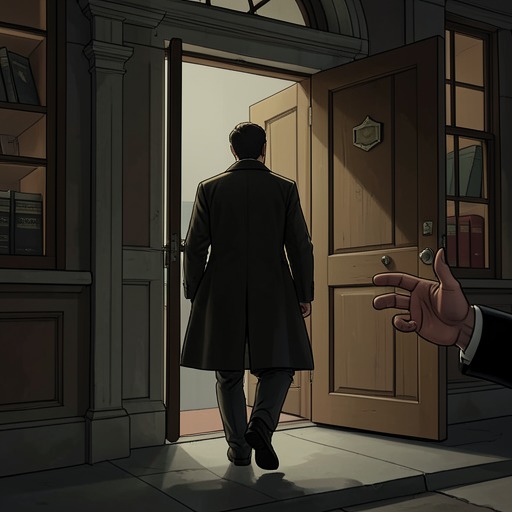
When the police need a way to contact the Bank robber, Jack looks for an alternative to sending his father into the building with pizzas. He is not certain that the suspected bomb is harmless, and the possibility of making Jim test that belief gives the decision a personal cost. Jim nevertheless goes into the building, despite being told to stay outside. At the door he encounters a man in a suit and ski mask, who first looks at the pizzas and then at Jim. The delivery brings Jim into direct contact with the person at the center of the crisis, rather than leaving him safely at the edge of it.
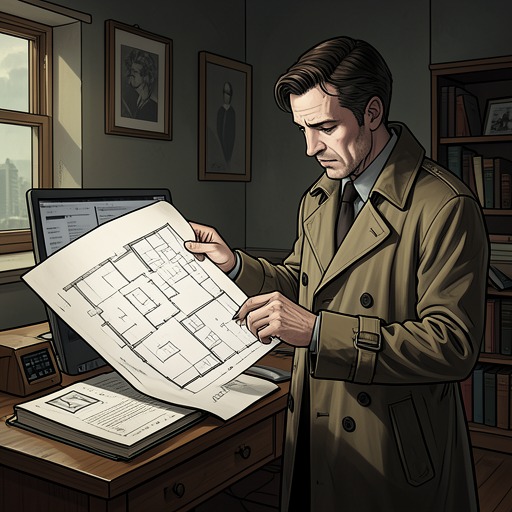
The robber’s desperation has a specific cause: she needs 6,500 to pay rent, and her husband’s lawyer is threatening to take her daughters if she has nowhere to live. Jim learns enough to see the crisis as more than a police operation. He proposes that she might hide in the neighboring apartment if the Real estate agent is also selling it and has its keys. His suggestion offers a possible hiding place without requiring the police to search every apartment immediately. The robber questions why a police officer would help her, recognizing the conflict between Jim’s official role and the assistance he is offering.
Concealment, Truth, and Their Relationship
After speaking with the Bank robber, Jim returns to the street and tells Jack what happened inside, but the account is not the truth. The narration makes clear that Jim is good at lying, even if he is not good at telling stories. His concealment is therefore not simply a failure to explain himself: he deliberately withholds what he has done. Jack is left to respond to a version of events that Jim has shaped, while Jim carries the knowledge that his actions have crossed the boundary of ordinary police procedure.
The lie sharpens the conflict between them when Jack later storms out of an interview room, exhausted and angry. Jim remains with the frightened Real estate agent and passes her a glass of water; the glass shakes in her hands. In this moment, Jim’s care is directed toward someone outside his family, expressed not as an argument or explanation but as a small, immediate gesture. It echoes the way he cares for Jack: attentive to distress, uncertain how to address it, and more able to offer something practical than to find the right words.
Jim eventually tells Jack the whole truth. Jack wants to be angry, but he turns instead to making a plan, and the witnesses are allowed to leave through the back door of the police station before he heads toward its main entrance. Their exchange does not erase Jim’s decision or the deception that followed it. It does, however, return them to working together: Jack’s response is shaped by his loyalty as a son even while he has reason to object as a police officer.
Later, in the car, Jim quietly says he would understand if Jack wanted to bring the woman in. His concern is that Jack may have changed his mind, and the remark shows how closely he is watching his son’s decision. Jim’s arc is not a conversion from reserve to eloquence. He remains cautious and anxious, but he repeatedly acts on concern: he enters the building, offers the robber a possible refuge, admits the truth to Jack, and gives his son room to choose what happens next. In a family where grief and addiction have made rescue seem both necessary and impossible, Jim’s care takes the form of staying present, even when neither he nor Jack can guarantee the outcome.